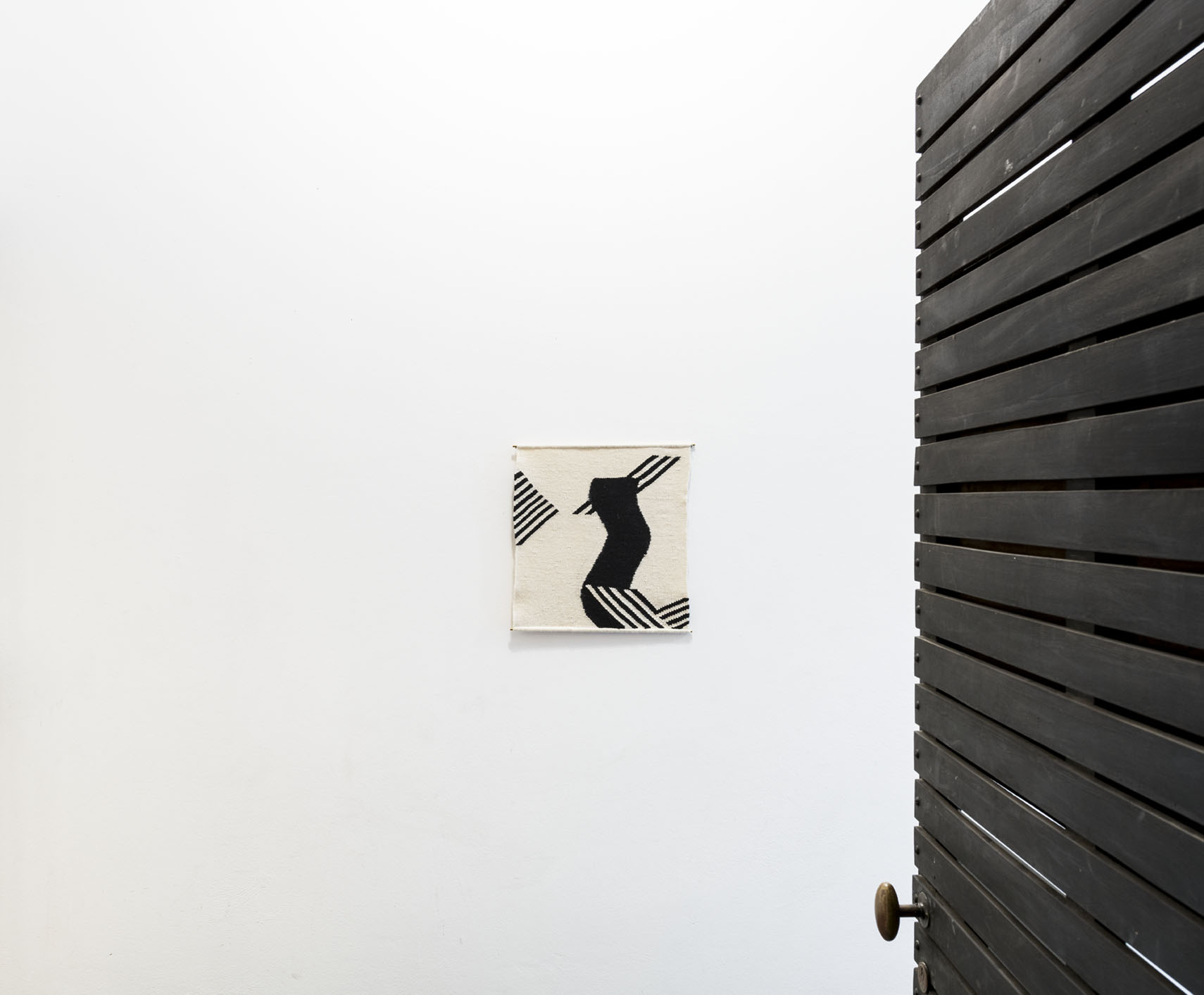
Working with wool is part of Flávia Vieira’s daily life (1983, Portugal). To build the fabrics that she has been producing for some years, the artist needs time, discipline and technical rigor. Created point-by-point, in an artisanal and manual way, and often using natural pigments, these works often feature woven figures based on iconographies of the body paintings of Brazilian indigenous peoples, such as the Karajá and the Asurini.
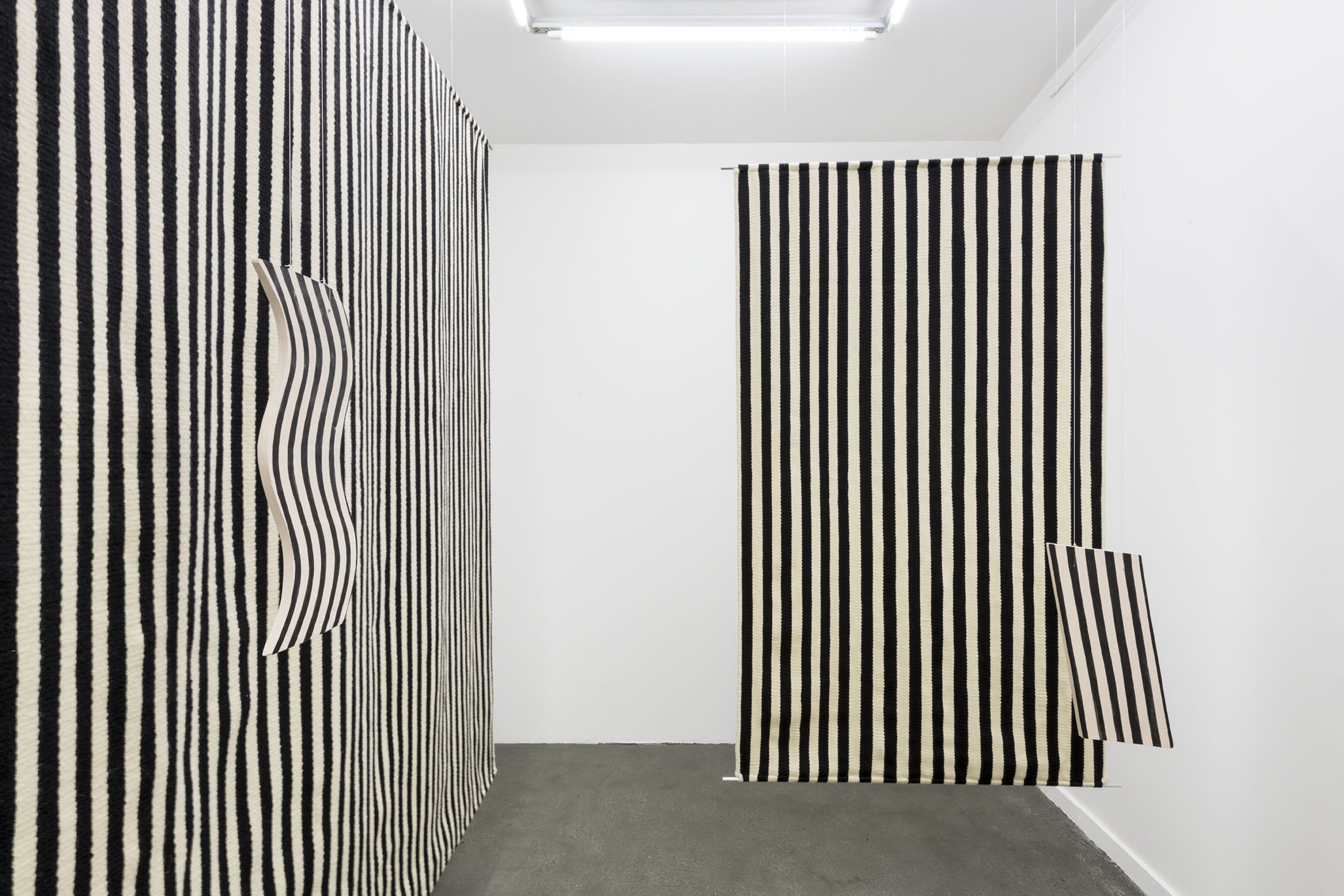
In “Pandã”, an installation that occupies the auroras Project Room, Flávia discusses the place of decoration in the field of visual arts by equating hierarchies between materials and mixing so-called “erudite” and popular references. In the 20th century, discussions about dissonances and points of contact between art and artifact were a topic of interest for both anthropology and the visual arts.
A considerable part of the experimentation of the avant-garde movements of the 20th century was aimed at breaking down these barriers and bringing artistic work closer to everyday life. In this long trajectory, the body has always been present and, long before the advent of performance as a field, it was fashion that effectively managed to popularize the sphere of visual arts and bring it into a media context. One of the pioneers of these actions was Sonia Delaunay, whose radical experiments in the 1920s resulted in the indiscriminate use of geometric patterns in dresses, sets and in her paintings, forming a kind of “total stamping”.
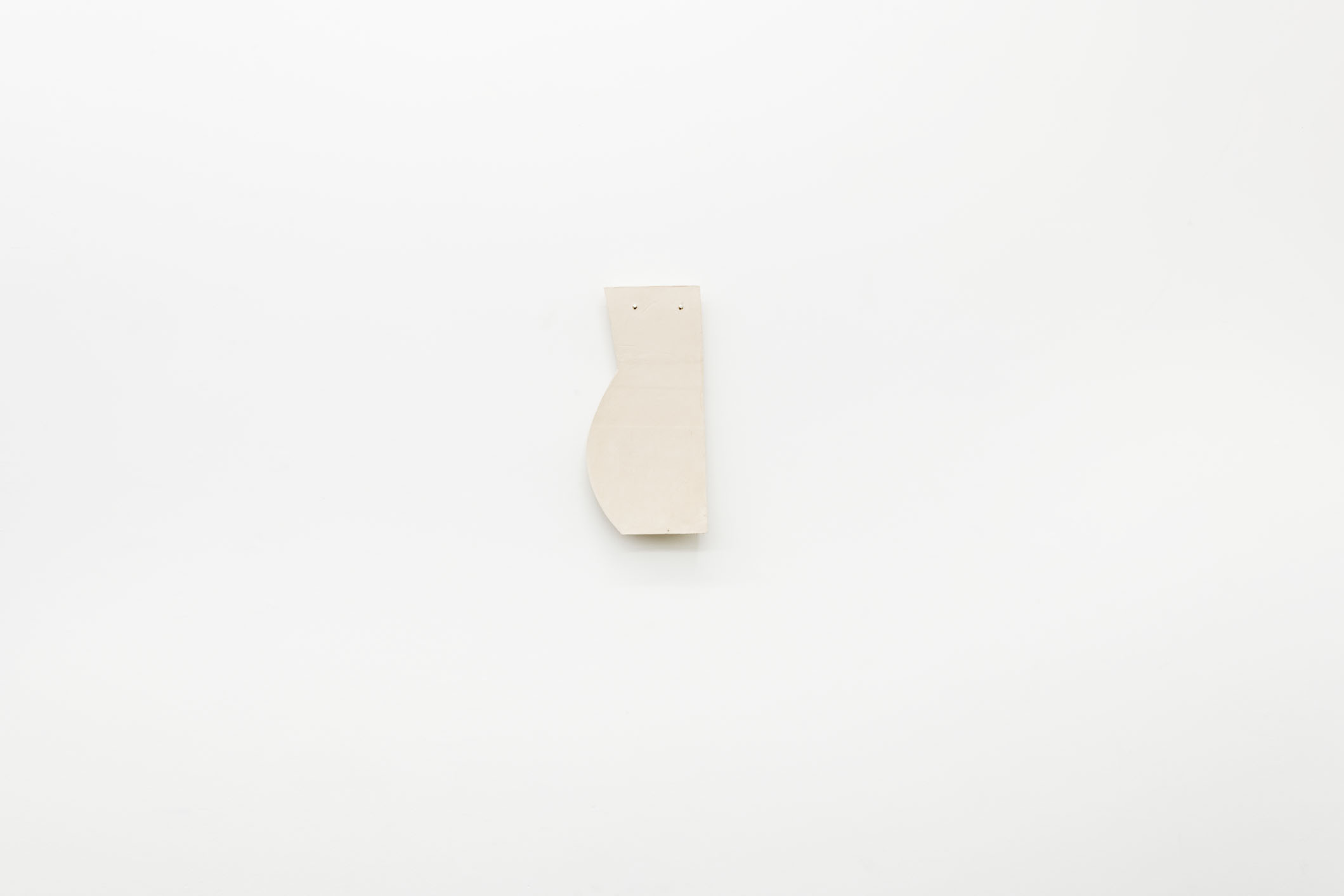
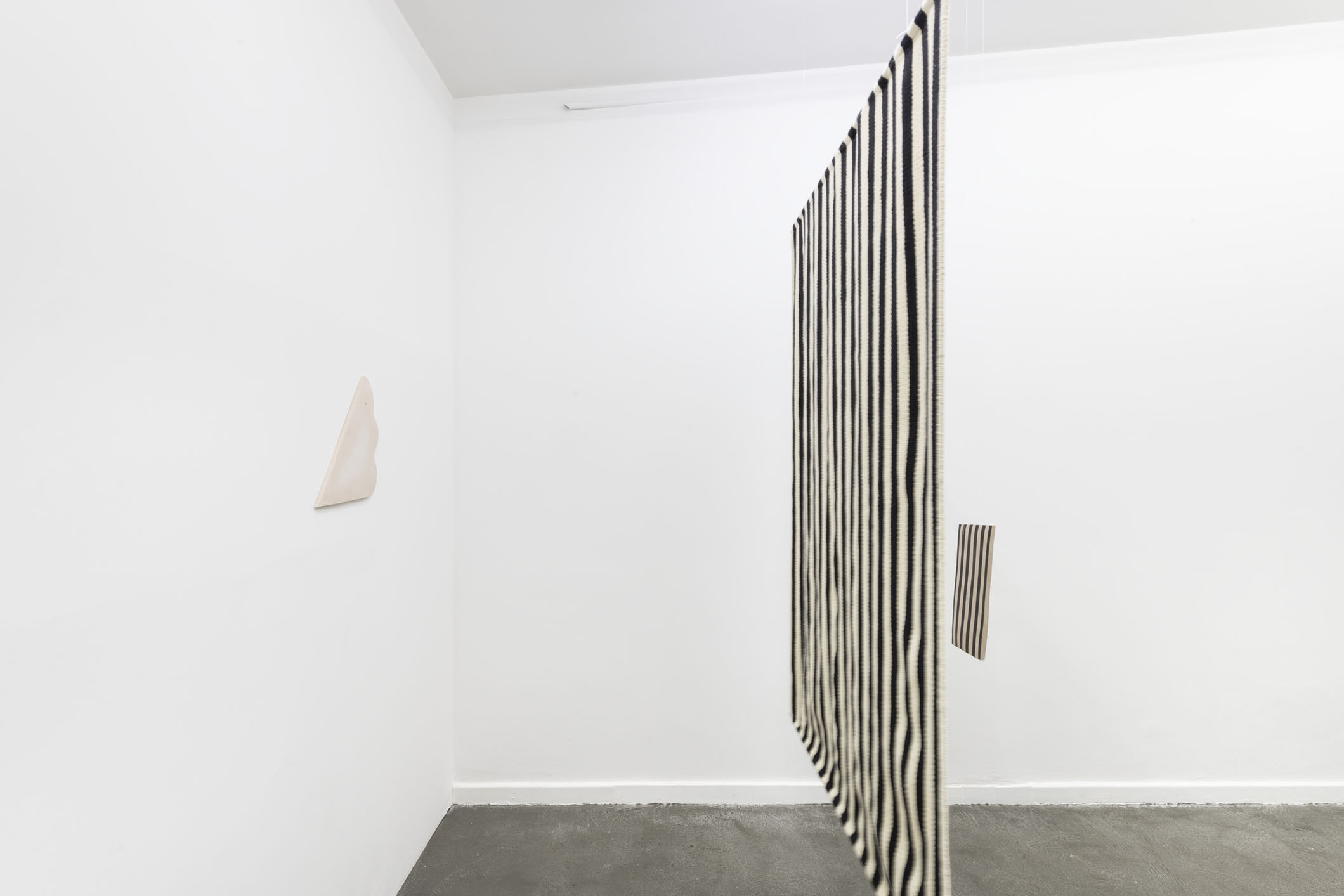
In this project, Vieira is inspired by part of the artist’s work by replicating the same image in the two weavings and in the ceramics placed in front of them, creating a relationship of panda. It is not by chance that each thing has its place: if the development process of these weavings results in unique objects that can be fetishized, the ceramics that Flávia creates are born from an easily replicable mold and in a much simpler process. Arranged in space, the pieces become part of a single organism, where the game between vision and illusion, and the displacement of meaning caused by the transposition of these drawings to a decorative bias, matter more than the artistic value that each piece may have. individually. Process, materials and result are intertwined in this work and, even though they are not totally evident to the viewer, they are as entangled as the plot points that form these fabrics.
Thierry Freitas